
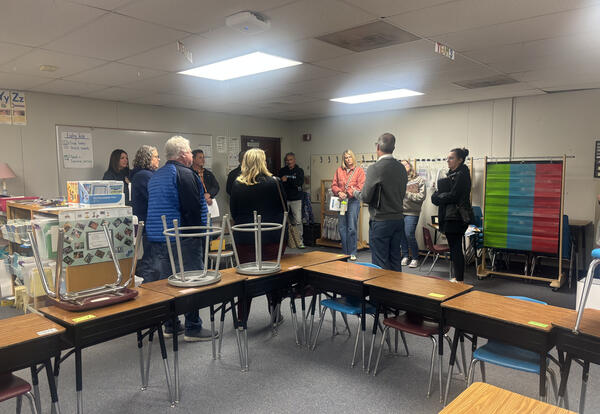
Facilities Planning Committee members meet inside a portable classroom at Kenroy Elementary during a recent school visit.
Eastmont’s Facilities Planning Committee continues meeting at schools across the district to better understand the real, on-the-ground needs of our buildings and how they support student learning. The committee includes parents, community members, staff, students, and district leaders, bringing multiple perspectives to decisions about how Eastmont plans for its future. This work supports long-term planning to ensure schools can serve students now and in the years ahead.
Recent meetings at Kenroy, Lee, and Grant elementary schools gave committee members the opportunity to tour classrooms, see building conditions firsthand, and review renovation histories. In addition to these visits, members have reviewed enrollment projections, building capacity information, regional growth patterns, and detailed facility condition reports with guidance from professional planners. Together, this information helps the committee identify educational program needs and prioritize facility improvements using both building and financial data.
During school visits, members have observed how aging systems, major repair needs such as roofing, plumbing, and HVAC, and limited classroom space can affect everything from student comfort and school safety to the types of programs schools are able to offer. In some buildings, reliance on portables, outdoor hallways, or limited points of access also shapes how students and staff move through and experience the school day.
The committee has also spent time learning about how school facility projects are funded, including the differences between capital levies and bonds and how each option can affect both students and community members. A recent presentation from a municipal finance expert from Piper Sandler Companies provided additional context around these funding tools.
As committee member Nick Warner shared, “Supporting the success of our children means looking at the entire educational ecosystem—not just teachers, administrators, and coaches, but the community as a whole.” He noted that the facilities planning process has reinforced how school buildings connect to broader community priorities and require shared responsibility. By listening to different perspectives and carefully reviewing both needs and costs, the committee hopes to build long-term solutions that reflect what matters most to students and families.
Throughout the process, members have weighed long-term facility needs alongside practical considerations such as cost, timing, and sustainability. The goal is to clearly define what schools truly need, while not pursuing more than is necessary, before bringing recommendations forward.
The committee will continue meeting in the coming weeks, with additional updates shared this spring. Its work will culminate in prioritized recommendations to the School Board, which may guide future facility planning, potential funding proposals, and opportunities for broader community input later this year.
Want more stories like this? Sign up for Eastmont News emails to get weekly articles straight to your inbox.