
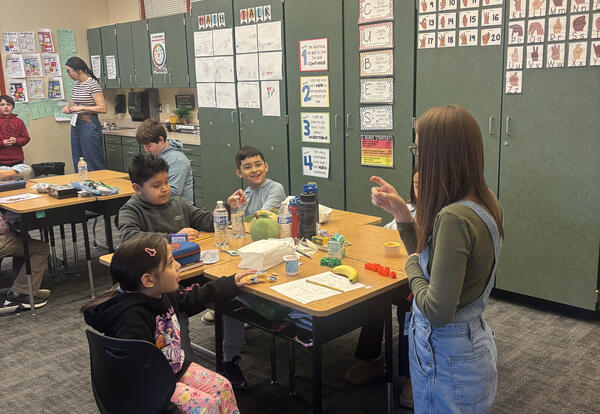
ASL interpreter Rebekah Homer signs during class at Clovis Point Elementary, helping ensure a student who is deaf or hard of hearing can access instruction alongside classmates.
Imagine learning several languages at the same time.
For students who are deaf or hard of hearing, learning to read and communicate in school means building language across multiple systems: visual, written, and signed. At Clovis Point Elementary, American Sign Language (ASL) interpreter Rebekah Homer helps ensure one student has full access to classroom instruction throughout the day.
Homer sits near the front of the classroom, signing lessons as the teacher speaks so the student can visually access the information. ASL interpreters across the district support students in all subjects and help bridge language between ASL and written English, making sure students can fully participate in their learning alongside their classmates.
Sometimes the impact is visible across the whole room.
One morning, while Homer signed the Pledge of Allegiance, several students around the classroom began signing along with her. Most are hearing students who have started learning ASL alongside their classmate. “Who’s learning ASL?” Homer said with a smile. “Everyone in the class.”
For the third grade student Homer supports, access to ASL has made a big difference. Before coming to Clovis, the student did not yet have a strong language system. As she has learned ASL at school, Homer has seen her confidence, communication, and personality grow. “I hope she grows up to be a comedian,” Homer said.
Learning to read presents unique challenges for students who are deaf or hard of hearing. Many early reading skills are traditionally based on hearing sounds within words. To support this, Eastmont uses visual language strategies, including a fingerspelling program that helps students connect hand shapes, letters, and written words.
Teacher of the Deaf Katie Cannata from the North Central Educational Service District supports students across Eastmont and works closely with ASL interpreters. In addition to helping guide instruction and language development, she also teaches ASL directly to students who are deaf or hard of hearing. She says the long-term vision is clear: “My goal is to have our kids graduate high school reading at grade level.”
For families, learning ASL can also strengthen communication at home. “No matter what, kids need language, at home and at school,” Homer said. “You’re building a community for your child when you learn ASL with them.”
At Clovis Point Elementary, language is not just something students study. It is something students, teachers, interpreters, and families have built together. As classmates begin learning ASL alongside their peers, students gain more than access to lessons. They gain connection, confidence, and a stronger sense of belonging in their school community.
Want more stories like this? Sign up for Eastmont News emails to get weekly articles straight to your inbox.
Learn ASL at Home
Want to try signing at home? Eastmont ASL interpreter Rachel Creek created short videos to help students and families learn a few basics of American Sign Language.
▶ Learn how to sign the ASL alphabet
▶ Follow along signing the Pledge of Allegiance
Click the video links to learn with your family.